
This post may contain affiliate links, which means we may earn a small commission—at no extra cost to you—if you buy something through them. We only share products we love.

It's the second week of Hot Dog Mom Summer
The heat index hit 94 by 10 a.m. here in Dallas.
If you’re new here, that phrase is something we put on the table last week to describe the summer a lot of us are quietly already having. The one where the dog comes first and the bar tab does not. (Link to last week’s piece here if you want to start there.)
But that piece was about the season. This one is about the rules. Because Southern summer is not a metaphor. It’s a hazard.
Every June we lose dogs to the same handful of preventable things: pavement that was hotter than anyone realized, a walk pushed twenty minutes too long, a lake that looked fine and wasn’t, a tick missed in the armpit fold.
This is the piece you bookmark. The 7-second pavement test, the signs your pup is overheating, the gear that actually does something, the lake rules I learned from my brother on a pontoon in Alabama, and (most importantly) permission to skip the walk when the air feels like a hair dryer pointed at your face.
Photo: Blue bird
Why Southern heat is more dangerous than we give it credit for
I called my friend, Lauren, who’s been a small-animal vet in Georgia for over a decade and asked her why this keeps happening. Why every June, like clockwork, we lose dogs to heat that, on paper, didn’t seem that bad.
She walked me through it.
Dogs don’t cool down the way we do. They sweat a tiny amount through the pads of their paws and the rest is panting. That’s the entire system.
So when the air is already hot and the humidity is already high, the panting stops working, because the air they’re moving across their tongues is the same temperature as the air doing the damage in the first place.
“The runway is shorter than people think,” she told me. A dog can go from panting hard to in real trouble in a window measured in minutes, not hours. By the time you notice something’s wrong, the clock has already been running.
Lauren also said the South is in its own category. “It’s the humidity. Phoenix dogs and Atlanta dogs are not having the same summer.” Dry heat lets the panting work. Wet heat shuts it down.
A few other things she flagged, in case any of them describe your dog:
- Dark-coated dogs run hotter. A black lab is operating about 10° hotter than a yellow lab on the same walk.
- Flat-faced dogs can’t pant efficiently to begin with. Bulldogs, frenchies, pugs, boxers, boston terriers. Their respiratory setup is already working overtime in normal weather. Add 90° and humidity and you’ve got an emergency that didn’t have to be one.
- Senior dogs, overweight dogs, and puppies run a tighter margin than a healthy adult. The buffer is smaller. Plan accordingly.
You don’t need to memorize any of this. You just need to take it seriously enough to use the next tool in this piece.
The 7-second pavement test
Here is the easiest, most underused tool you have.
Before you walk them, put the back of your hand flat against the pavement. Hold it there for 7 seconds. If you can’t, the walk doesn’t happen on that route. Find grass. Find shade. Or skip it.
Why the back of your hand: it’s about as sensitive as a paw pad. (Your fingertips are tougher. They lie to you.)
A few things that make the test more useful in practice:
- Pavement can be 40 to 60°F hotter than the air. When it’s 85° out, the asphalt can hit 135°. At 87°, asphalt can burn skin in 60 seconds.
- The test reads the route you’re standing on, not the forecast on your phone. A shaded sidewalk and a sun-baked parking lot are not the same surface.
- Sand at the lake can be worse than asphalt. So can bare metal. Truck beds, fire escapes, the top step of a porch in afternoon sun.
If the pavement is too hot for your hand, it’s too hot for their paws. There’s not a workaround for this one. Booties help a little. Paw balm helps a little. Carrying the pup across the crosswalk helps a lot. Going at 6 a.m. helps the most.
5 signs your dog is overheating
Save this section. Screenshot it if you want. The earlier you spot any one of these, the better the outcome.
1. The panting changes shape. Normal panting has a rhythm. Overheated panting gets fast, loud, and ragged. The tongue hangs out further. It looks like they’re working harder to breathe, because they are.
2. The gums change color. Healthy gums are bubblegum pink. Overheating gums go bright red early, then pale and tacky later. Press a finger against the gum. It should turn white and refill pink within two seconds. If it stays white longer, get help.
3. The drool gets thick. Not the normal “they just saw a squirrel” string of clear drool. Thick, ropey, stringy drool is a heat sign.
4. They get uncoordinated. Stumbling, wobbling, suddenly lying down on a walk, walking like they’re drunk, glazed eyes. This is past tired. This is the warning.
5. Vomiting or diarrhea on a walk. Often dismissed as “they must’ve eaten something.” In the middle of a hot walk, it’s a heat sign until proven otherwise.
If you spot one, you act. If you spot two, you stop trying to figure out which one it is and you start the next section.
What to do if you spot heatstroke
This was the part of the conversation where my friend got a little quieter.
“The next ten minutes matter more than anything else you’ll do that day,” she said. Then she walked me through it.
1. Get them out of the heat. Inside the house, the car with the AC blasting, a shaded porch with a fan, the grocery store entryway if that’s where you are. Move first, plan second.
2. Cool the body, but not with ice. Cool (not cold) tap water over the belly, the insides of the legs, the paws, and under the chin where the skin is thin. Lay a wet towel across their back. Offer water to drink if they want it. Do not pour water into their mouth.
3. Skip the ice bath. This was the one she wanted to underline. Ice water and ice packs can constrict the surface blood vessels and trap the heat inside the body, which is the opposite of what you want. Cool tap water, moving air, wet towels. That’s the protocol.
4. Call the vet on the way. Not after they seem better. On the way. Even dogs that look recovered can have organ damage that doesn’t surface for hours. The vet visit isn’t optional, even when they’re wagging their tail again by the time you get there.
The rule for the whole section, which I think she’d want me to say flat out: if you’re asking yourself “is this an emergency?”, the answer is treat it like one and apologize later.
Daily heat-safety habits
You don’t need a system. You need four small shifts.
Walk before 8 a.m. and after 8 p.m. I know. I’m sorry. But this is the South. The 5 p.m. walk you used to do is not the walk anymore. By June, the morning walk is the real one. The evening one is the bonus.
Know your shade routes. I have a winter walk and a summer walk and they are not the same walk. In December I take the walk I know will be sunny because we both want the extra warmth! In June, I have a completely different, shaded, walk because it’s the only way the ground is bearable.
The collapsible bowl lives in the tote. The day you forget it is the day you will need it most.
Watch the heat index, not the temp. 85° with 70% humidity is more dangerous than 90° with 30%. Most weather apps show heat index right under the temperature. Use that number.
A short note on indoor swaps: a 15-minute snuffle mat session, a lick mat, or a frozen Kong tires a dog out about as much as a 30-minute walk. The mental work counts. On the worst days, the walk gets swapped for that and nobody is worse off for it.
Photo: Korso
Gear that actually helps
A cooling vest you soak in water. Skip the dry, gel-pack vests. In real Southern humidity, they don’t do much. The kind that works is the soaked, evaporation-based vest. Dunk it, wring it out, put it on. Evaporation cools the dog as the water leaves the fabric. You’ll re-soak it every hour or two on a hot walk, which is the whole point. Our pick →
A collapsible silicone bowl. The single most useful four dollars you’ll spend. Clips to a leash or a tote. Folds flat. Holds enough water for a real drink, not a tease. Our pick →
Paw balm. Two jobs: protect the pads before a walk on warm (not hot) pavement, and repair them after. The pads can take a beating without you seeing it until later that night. A balm with shea butter, beeswax, and coconut oil is the simplest formula that works. Our pick →
A cooling mat for inside. Especially if your pup is the kind that picks the warmest spot in the house to nap in. Self-cooling, pressure-activated mats hold up better than gel ones, in our experience. They’ll wander onto it when they’re ready. Don’t make a thing of it. Our pick →
A leash water bottle. If you only buy one thing on this list, this is the one. The kind with the flip-up bowl built into the bottle. Clips to the leash, holds about 20 oz, and means you never have the conversation with yourself again about whether it’s worth turning around to go get them water. Our pick →
A canine lifevest with a top handle. For anyone whose summer involves a boat, a lake, a pool, or a beach. The top handle is non-negotiable. It’s how you pull them up onto the dock or into the boat when they’re tired or panicked. (More on why this matters below.) Our pick →
That’s the kit. You don’t need anything else for now.
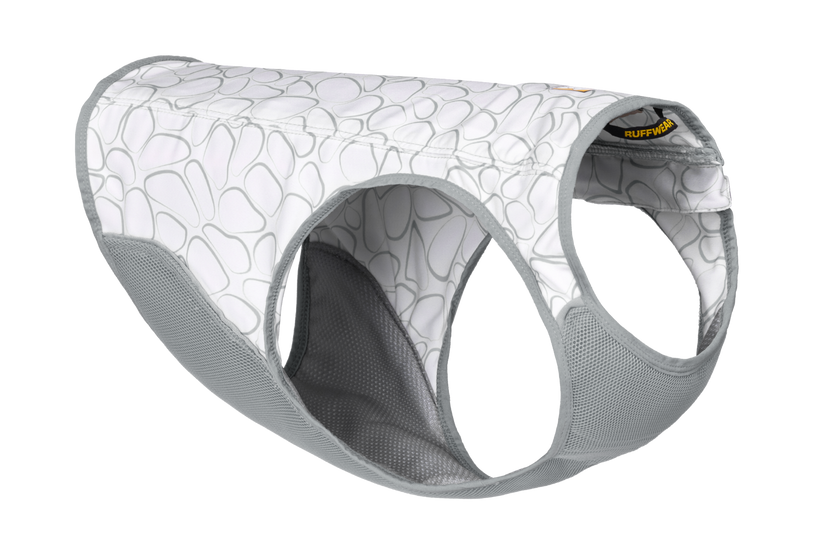
Swamp Cooler Zip™ Cooling Dog Vest
Stays wet and cool through any outdoor adventure. Lightweight, and allows for full range of motion!
From $59.99
Shop Now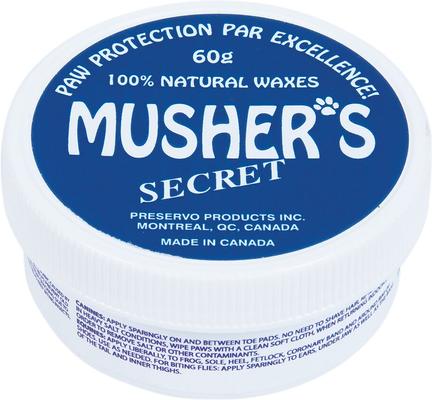
Musher's Secret Paw Protection Natural Dog Wax
Ultimate paw protection made with all natural waxes. Great for heat, also great for the cold!
From $12.99
Shop Now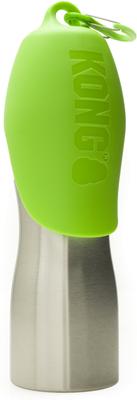
KONG H2O Stainless Steel Dog Water Bottle
Portable, keeps water cool, and easy to travel with. What more could you need!
From $19.59
Shop NowWhen to skip the walk entirely
Here is the permission slip.
If the heat index is 90° or above. If it’s 85° and the humidity is high enough that you’re already sweating standing still. If your pup is flat-faced. If they’re a senior. If they’re a puppy. If they’ve been sick recently. If they’re overweight. If they’re panting hard before you’ve even clipped the leash on. If your gut says “this is dumb.”
Skip the walk.
They won’t hold it against you. They will not be sitting on the rug thinking “Mom let me down today.” They will be sitting on the rug thinking nothing, which is one of their superpowers, and then they will fall asleep, which is the other one.
A skipped walk on a 96° day is a good decision. A walk pushed through on a 96° day is the decision that ends in a vet visit you didn’t have to have.
Your job in June, July, and August is not to keep their routine perfect. Your job is to keep them here.
Past the heat: the other things trying to kill them in June
Heat is the headline. It is not the whole story.
If you live in the South, summer comes with a handful of other hazards that quietly rack up the vet bills (and worse) every year. Most are preventable. None are dramatic until they are.
Here’s the short version of the rest.
Water safety, and the rule I won’t argue about
A few years ago my brother was on a pontoon boat out on Lake Martin in Alabama. He watched a dog jump off the front of the boat. The dog did not come back up.
I’m not going to dress that story up. He saw it. He still talks about it.
The rule from that story, which I will not argue with anyone about: if your pup is on a boat, your pup is in a lifevest and on a leash or tether. Both. Not either. The lifevest is for the part where they’re in the water. The tether is for the part where they decide to go in.
Because they will decide. They are dogs. You do not know what is going to trigger the jump. A bird. A wake. A fish. A jet ski. Another dog on another boat a hundred yards away. The pontoon that comes alongside yours. You can be the most attentive dog mom on earth and you cannot predict it.
A few other things that matter on summer water:
Not every dog can swim. Bulldogs, pugs, and frenchies sink. Long-bodied dogs with short legs (dachshunds, corgis) struggle. Even Labs get tired faster than you think. A lifevest is not an insult to your athletic dog. It is a flotation device for the moment they get tired in the middle of a cove half a mile from the dock.
Lake water is not drinking water. Toxic blue-green algae blooms in Southern lakes and ponds get worse through the summer. Blue-green algae can kill a dog within hours of ingestion and there is very little a vet can do once it’s in. If the water looks like pea soup, smells off, or has a film or scum on the surface, no swimming, no drinking, no wading. Bring a separate bottle. Trust your eyes.
Salt water is worse. Beach trips are great. Letting them lap up salt water is not. It makes them vomit, dehydrate fast, and on a long beach day can be genuinely dangerous. Fresh water bowl at the towel. Refill it before they ask.
The pool has steps. They need to know where. A surprising number of pool drownings happen because the dog panics, swims in circles, and can’t find the exit. Walk them to the steps a few times when the pool is calm. Make it a thing they know with their body, not just their eyes.
Rinse them off after. Pool chlorine, lake muck, salt water, river silt. None of it is good sitting on the skin and coat for the ride home. A garden hose is fine. You do not need to make this fancy.
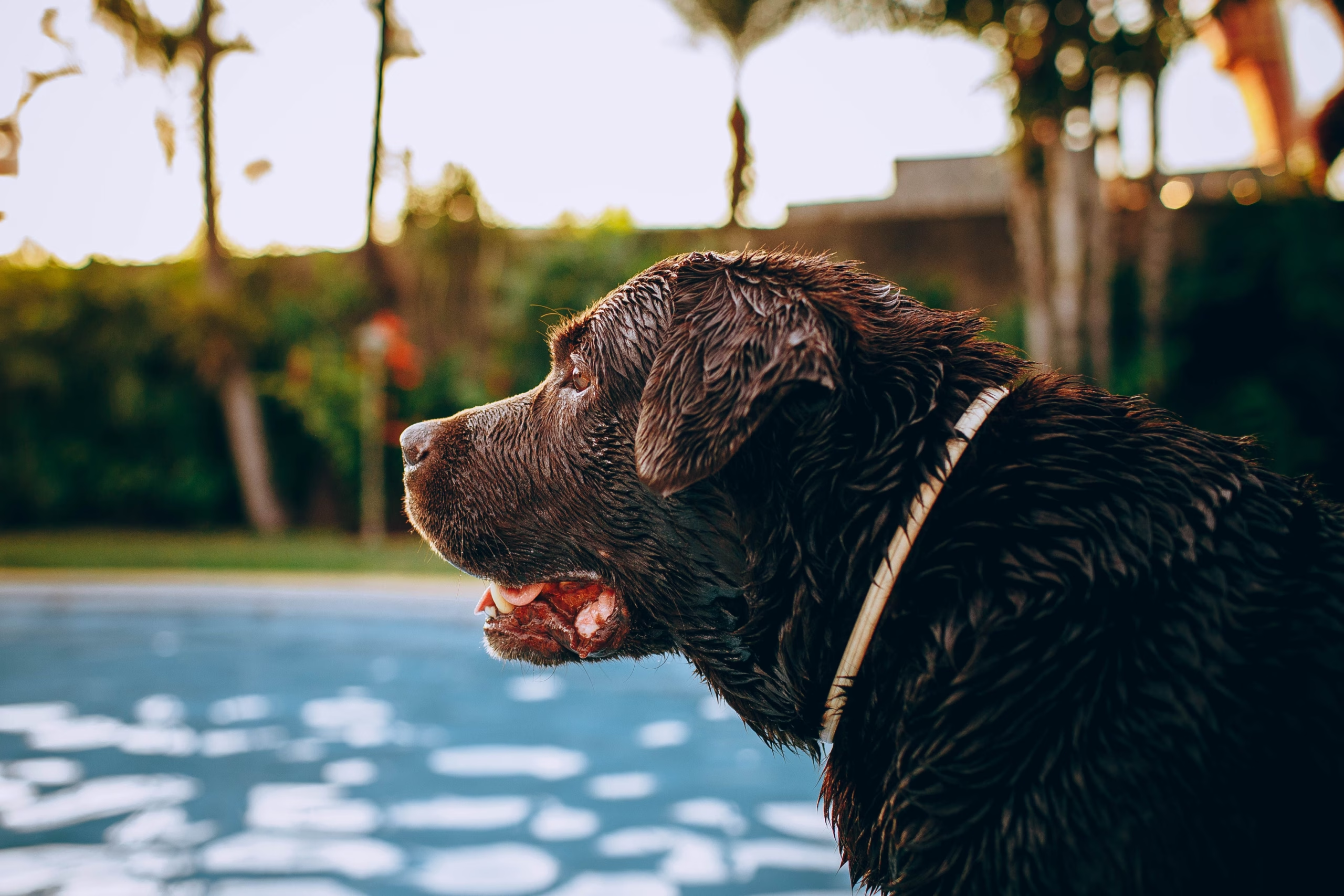
Photo: helenalopes
Fleas, ticks, mosquitoes (the unholy trinity)
The South is easy mode for fleas, ticks, and mosquitoes. We don’t get the winter freeze that resets the population the way the Midwest does. By June, all three are operating at full strength and they are operating on your dog.
Fleas. If you’ve ever had a flea problem, you know. If you haven’t, the short version is that by the time you see one flea, there are several hundred eggs and larvae in your couch, your bed, and the rug they nap on. Year-round prevention is the only move that works. Topical, oral, or collar. Your vet will have a preference based on the dog and the area. Pick one. Use it every month.
Ticks. Lyme is the famous one, but in the Southeast you’ve also got Ehrlichia, Rocky Mountain spotted fever, and a few others your vet can name faster than you can spell. Tick check after every walk in tall grass or woods. Behind the ears. Around the collar. In the armpits. Between the toes. At the base of the tail. You don’t need a magnifying glass. You need a hand running through fur with intent.
Mosquitoes. Mosquitoes give dogs heartworm, which is a slow, expensive, sometimes fatal disease that is almost completely preventable with a monthly chew. If your pup is not on heartworm prevention right now, that is the call to make this week. Heartworm treatment runs in the thousands. Prevention runs about ten bucks a month. We don’t lecture about much in this house. We lecture about that.
The vet visit where they ask “are y’all current on prevention?” is the one we want you to walk into with a yes.
Snakes (the short version, because most of you already know)
In the South, you’ve got copperheads, cottonmouths (water moccasins), rattlesnakes, and coral snakes. Copperhead bites are the most common and rarely fatal with prompt vet care. The others are worse.
The rules are short:
- Keep them on leash on trails, especially near water and woodpiles.
- Don’t let them nose around fallen logs, rock piles, or thick brush you can’t see into.
- At home: mow the yard, clean up the woodpile, and don’t leave dog food out at dusk. (It attracts rodents. Rodents attract snakes.)
- If a snake is in your yard, the dog comes inside first. You decide what to do about the snake after.
If they get bitten, get to a vet immediately. Don’t try to identify the snake. Don’t suck out venom. Don’t apply a tourniquet. Carry them if possible (keeps the venom from circulating as fast), get in the car, drive.
That is the whole snake section. Most of you will never need it. The few who do are very glad they read it.
Hot Dog Mom Summer means knowing when to stay home. The porch counts. The AC counts. The lifevest counts. The pup counts most.