

Every Southern sunrise brings echoes of paws across dew-soaked grass, noses to the wind, ready for work or play.
For centuries, sporting dogs have charted the changing seasons and traditions of Southern life, leading hunts through pine woods and river bottoms, guarding livestock, and eventually curling up at family hearths after a day in the field.
These dogs are more than workers; they are legends and living links to land, loyalty, and the identity of the region itself.
From grand plantations to backyard fields, their stories follow the South’s journey from sport and labor to home and heart, making each wag of the tail a reflection of inherited values and enduring love.
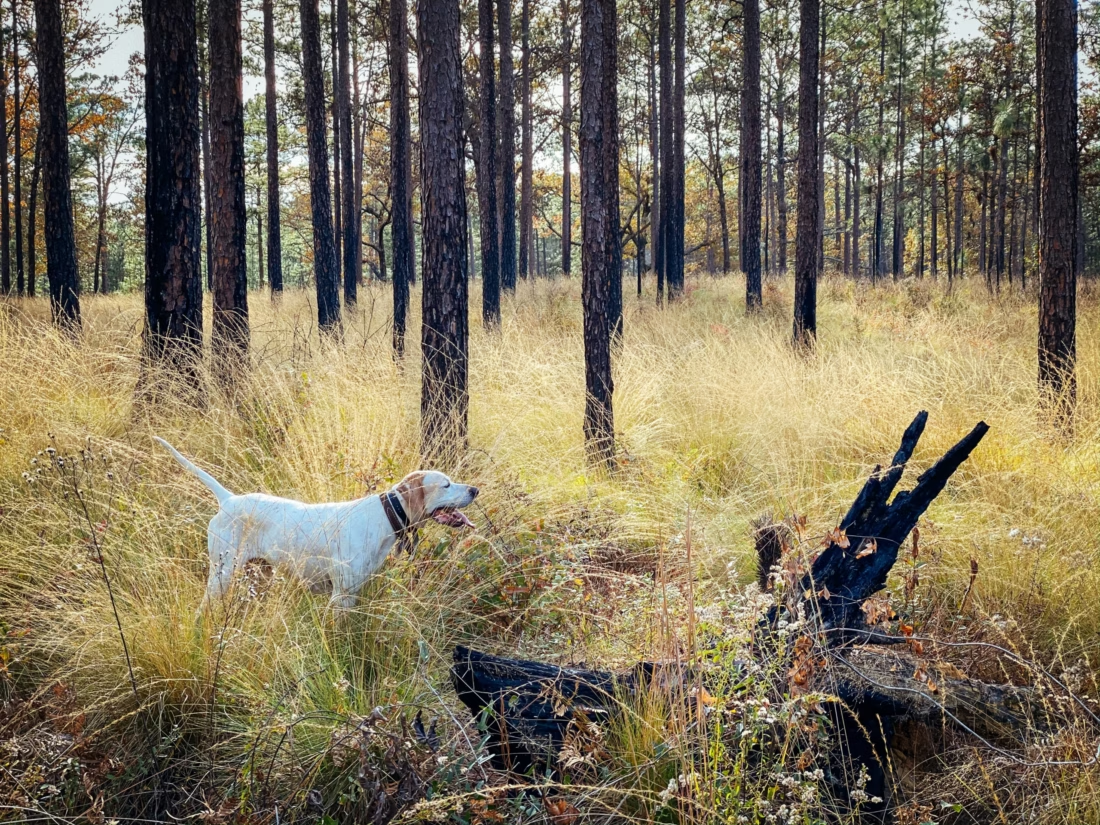
Photo Credit John Cobb
Sporting Dogs in Southern History
In the antebellum South, sporting dogs like English Pointers, Setters, and Bloodhounds were valued for their ability to hunt, guard, and work alongside landowners and laborers.
Their care and cultivation were intertwined with agricultural rhythms in plantations, farms, and woodland estates.
Selective breeding produced lines that were particularly suited to humid climates, dense forests, and active quarry such as quail, duck, and rabbit (Komarek, 1979; Orvis News, 2018; Gilliam, 2024).
Owners took pride in the stamina and temperament of their field-trained companions, and generations of southerners could count on their dogs just as they did other essential farm assets.
Training, Skill, and Cultural Rituals
The expertise of southern dog handlers became a local art form, with families, trainers, and even gamekeepers contributing to a refined tradition of sporting dog training.
African American expert trainers, such as those celebrated in South Georgia today, passed their craft down through generations, often establishing reputations that rivaled any other sporting figure in the region (Orvis News, 2018; BW Trailer Hitches, 2022).
Bird dog field trials grew up as neighborhood and regional events, with handlers testing the skills of their young dogs on scenting, pointing, and retrieving in the classic southern terrain of switchgrass and pine.
English Pointers earned particular fame, with roughly eighty percent of National Championship field trial wins since 1896, but Setters and Spaniels left their own mark, known for biddable natures and stamina in hotter climates (Garden & Gun, 2017).
Breeders and trainers balanced traits such as speed, drive, and intelligence with an increasing emphasis on sociability and good manners, qualities necessary both in the field and at home.
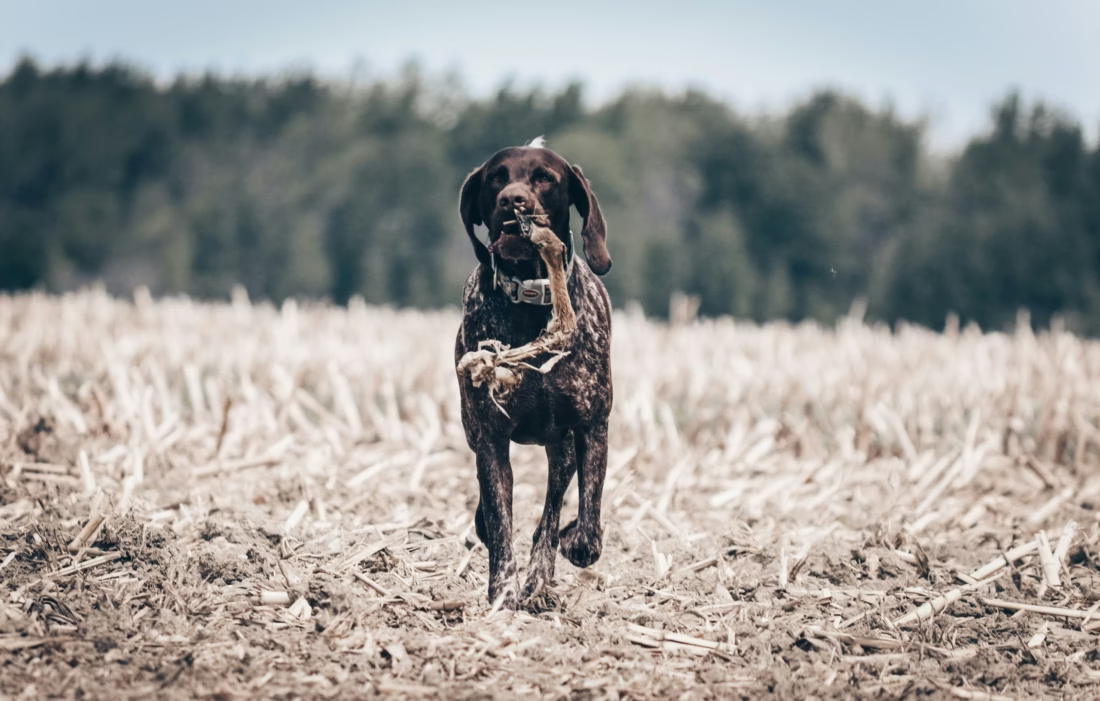
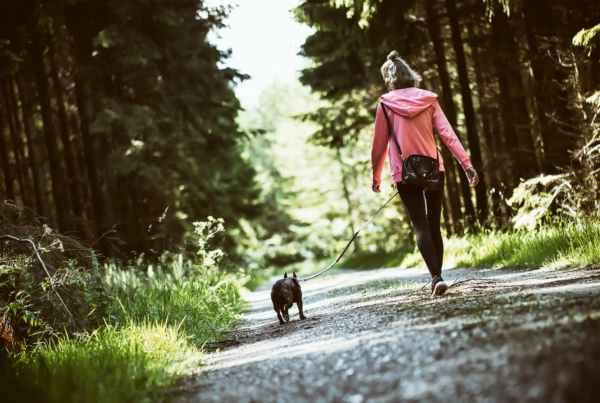
Photo Credit Marie-Pier Fillion
Southern Breeds Born of Place
Place defines breed.
Carolina Dogs, wild and loyal, still roam Georgia and South Carolina’s forests and are deeply pack-oriented and suspicious of strangers (Gilliam, 2024).
Plott Hounds, North Carolina’s state dog, have a lineage dating to 1750 and are praised for their power and gentle temperament.
Boykin Spaniels, developed on South Carolina’s Wateree River, became favorites for their moderate pace and ability to work in thick brush or chilly water, joining Turkey, Quail, and Duck hunts where specific skills were required (Pheasants Forever, 2025).
Regionally bred sporting dogs have adapted to local topography and weather, resulting in resourceful working animals that can thrive with minimal resources and endure intense seasonal activity.
From Field to Family Room
By the twentieth century, the relationship between sporting dogs and humans took on new meaning.
As Southern life became more suburban and rural populations shifted, these hardy dogs moved from kennels and outbuildings into the heart of family homes.
Dogs once kept solely for fieldwork became beloved icons, companions at picnics, partners in porch sitting, and playmates to children (Ottertail Kennels, 2024; The Hunting Company, 2025).
Many sporting breeds, including Labradors, Golden Retrievers, and Beagles, excelled at making this transition, bringing curiosity, even-temperedness, and a thirst for companionship.
Active families learned to balance structure and play, keeping their dogs’ drive alive through games, training, and shared outdoor adventures.
Reflections of Southern Values
The transformation from worker to companion dog mirrors core Southern values: loyalty, hospitality, teamwork, and devotion to land and home.
Today, modern field trials serve both as sport and gathering, where neighbors honor the achievement and heritage of breeders and handlers.
Events like the Black Bird Dog Handlers Field Trial celebrate the contributions of trainers of color and tradition bearers, ensuring the community’s story is passed down (BW Trailer Hitches, 2022).
Even as the technological world grows, Southern field trials remain vital, teaching children stewardship and sportsmanship and demonstrating how the region’s values can persist through hands-on, intergenerational care.
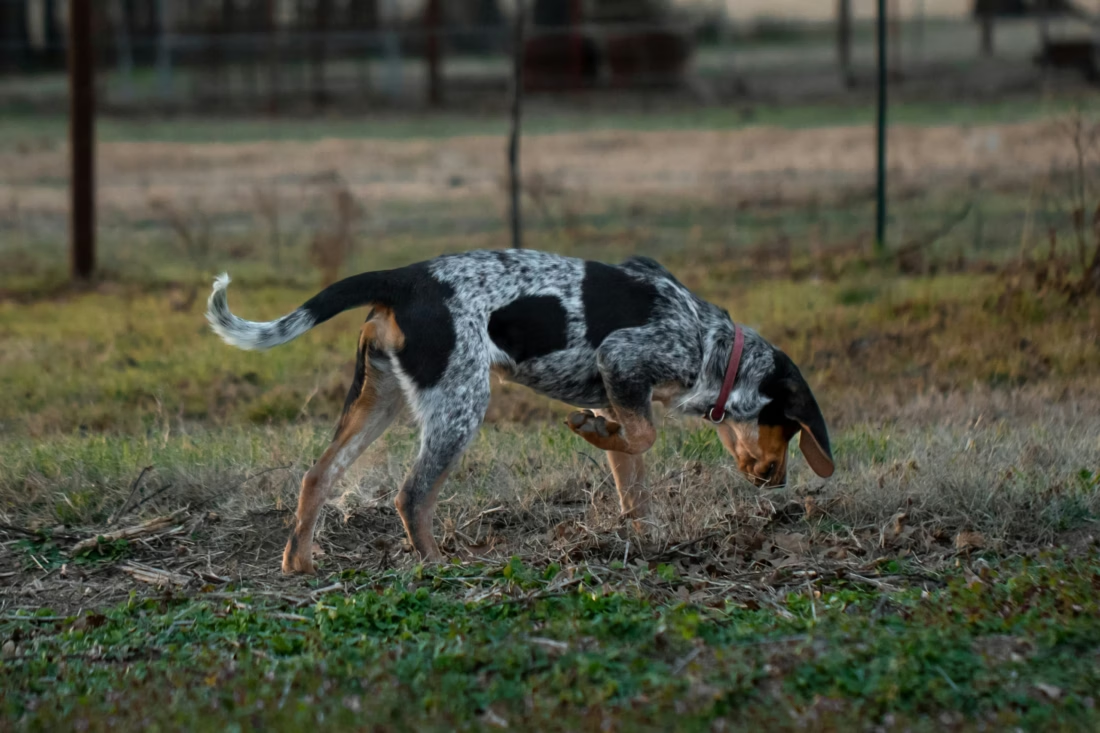
Photo Credit Howard Wheeler
Sporting Dogs in Modern Times
Today, Southern sporting dogs are as likely to be found curled up in the sunlit foyer as they are flushing birds from tall grass.
Retired trial champions and rescue dogs often spend their best years enriching families, bridging generations of tradition and modern values of compassion.
Organizations such as Second Chance Ranch Rescue rehabilitate hunting and misunderstood breeds, teaching that loyalty and drive can be matched with kindness and patience (Second Chance Ranch, 2018).
Museums like the National Bird Dog Museum in Tennessee document this living history, showing how sporting dogs have moved from the edges of field and farm to the center of Southern life (Birddog Foundation, 2025).
Legacies That Endure
In every Southern hunting tale, or porch swing memory, there lies the mark of a sporting dog, alert, eager, and true.
Their evolution from plantation asset to family icon is a story of resilience, mutual respect, and enduring affection. Sporting dogs continue to teach the region about hard work, stewardship, and generosity, remaining powerful reminders of Southern identity woven through every chapter of life.
Meet The Author

Beau Boyd is the Co-Founder and Managing Editor of Darling Dog. He lives in Selma, Alabama with his family and his beloved Goldie, Charlie.
References
BW Trailer Hitches. (2022). Kings of the South: Black Bird Dog Handlers Field Trial. https://www.bwtrailerhitches.com/blog/2022/kings-south-black-bird-dog-handlers-field-trial
Birddog Foundation. (2025). National Bird Dog Museum. https://birddogfoundation.com
Garden & Gun. (2017, August 6). Best of the sporting south: Top dog. https://gardenandgun.com/feature/best-of-the-sporting-south-top-dog/
Gilliam, B. (2024, August 31). Doggoneit! Southern dog breeds. https://www.locallifesc.com/doggoneit-southern-dog-breeds/
Komarek, E. V. (1979). The role of the hunting plantation in the development of game management. Tall Timbers Research Station. http://talltimbers.org/wp-content/uploads/2014/03/Komarek1979_op.pdf
Ottertail Kennels. (2024, December 12). Can a hunting dog be a family pet? https://ottertailkennels.com/can-hunting-dog-be-family-pet/
Orvis News. (2018, November 18). Reconsidering hunting plantations. https://news.orvis.com/hunting/reconsidering-hunting-plantations
Pheasants Forever. (2025, October 20). Bird dog breeds. https://www.pheasantsforever.org/hunt/bird-dog-breeds.aspx
Second Chance Ranch. (2018). Adopt a dog. https://www.secondchanceranchrescue.com
The Hunting Company. (2025, February 11). 12 hunting dog breeds that also make good pets. https://thehuntingcompany.com/12-hunting-dog-breeds-that-also-make-good-pets/