

Down South, we've got a saying:
“If Grandma couldn’t fix it with sweet tea, Vicks, or vinegar, it probably wasn’t worth fixing.”
Now, while I don’t recommend rubbing Vicks on your hound (please don’t), I do think there’s something to be said about good old fashioned dog home remedies.
Of course, let’s start with a porch disclaimer: nothing replaces your vet.
These remedies are about easing minor woes, not skipping professional care.
Think of them as the doggie equivalent of chicken soup for a head cold – comforting, helpful, but not a replacement for medicine when things get serious.

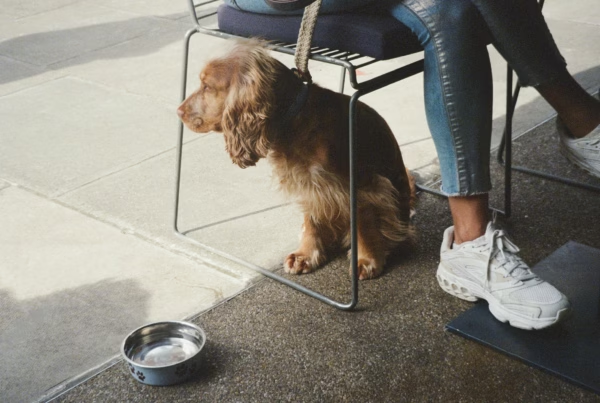
Photo Credit Nandha Kumar Arumugam
Common Southern-Style Dog Home Remedies
1. Oatmeal Baths for Itchy Skin
Got a pup scratching like they’re auditioning for the Grand Ole Opry washboard band?
Put plain oats into a food processor, stir into warm water, and let your dog soak. It soothes hot spots, bug bites, and plain old skin irritation. Bonus: you’ll get a cleaner-smelling dog without shelling out for fancy spa shampoos.
2. Coconut Oil for Dry Paws & Noses
Y’all, coconut oil is like duct tape – it fixes everything.
Rub a little on cracked paw pads or a dry nose, and watch it soften up. Just be prepared for some enthusiastic licking.
3. Pumpkin for Upset Stomachs
When your dog’s belly is more dramatic than a telenovela, plain canned pumpkin (not the spiced pie filling) helps regulate digestion.
A spoonful can calm loose stools or help with constipation.
4. Apple Cider Vinegar for Ears
Some folks swear by diluted apple cider vinegar as a gentle ear rinse to keep funk and yeast away.
Just make sure there are no open sores – vinegar on a cut will have your pup looking at you like you betrayed their very soul.
5. Chamomile Tea for Minor Eye Irritation
If your pup’s been out in the pollen storm we call spring, brew chamomile tea, let it cool, and use a cotton ball to dab gently around their eyes. Works like a charm for mild irritation.
6. Frozen Carrots for Teething Pups
Instead of letting your puppy gnaw on the table leg like a beaver, toss them a frozen carrot. It soothes sore gums, plus they’ll look adorable chomping away like Bugs Bunny’s understudy.
7. Aloe Vera (Straight from the Plant)
Got a sunburned dog or hot spot? A little aloe gel straight from the leaf cools things down. Just keep it light and make sure they don’t lick it off like it’s dessert.

Photo Credit NRD
Home Remedies That Help Humans… But Can Harm Dogs
While some home remedies can be helpful for dogs, others fall into a tricky category:
totally fine for people… but not safe for pups.
Dogs process things differently than we do. Their bodies are smaller, their systems more sensitive, and what soothes us can sometimes overwhelm them.
So before we get too comfortable reaching into the pantry or medicine cabinet, here are a few common “human fixes” that don’t belong in dog care… even with the best intentions.
1. Garlic & Onion (and anything in that family)
Garlic and onion get a lot of praise in human wellness circles. But for dogs, they’re a hard no.
Even small amounts can damage a dog’s red blood cells and lead to anemia over time. This includes fresh, powdered, cooked, or “just a little bit mixed in.”
If it’s helping your immune system, it’s not automatically helping theirs.
2. Human Pain Relievers
This one’s important enough to say plainly: never give your dog human pain medication.
Medications like acetaminophen (Tylenol), ibuprofen (Advil), and naproxen (Aleve) can cause serious organ damage in dogs… even at doses that seem small.
If your dog seems uncomfortable or in pain, this is one of those moments where a call to your vet is always the right move.
3. Essential Oils (Especially Concentrated Ones)
Essential oils are often marketed as “natural,” but that doesn’t make them dog-safe.
Oils like tea tree, wintergreen, eucalyptus, and cinnamon can irritate a dog’s skin, upset their stomach, or even affect their nervous system… especially when applied directly or used in high concentrations.
If a remedy relies on strong essential oils, it’s best to skip it unless your vet has specifically said otherwise.
4. Apple Cider Vinegar (When Used Incorrectly)
Apple cider vinegar gets a lot of attention as a cure-all. And in very specific, diluted situations, it can have a place.
But used straight, too often, or on already-irritated skin, it can actually make things worse. Think stinging, dryness, and increased irritation… the opposite of what you’re trying to do.
Context and dilution matter here, and guessing can backfire.
A Good Rule of Paw
If a home remedy:
-
works by “burning,” “tingling,” or “drawing things out”
-
is strong enough that you’d hesitate to put it on a baby, or
-
comes from a human medicine bottle
…it probably doesn’t belong in your dog’s care routine.
Helping your dog at home should feel gentle, supportive, and boring in the best way. Not experimental.
Always check with your vet before trying new dog home remedies.
If your dog’s acting off for more than a day or two, go see the vet.
FAQ: Southern Dog Home Remedies
Are these home remedies safe for all dogs?
Not always. A bulldog might take to coconut oil just fine, but a Chihuahua could get an upset stomach from too much. Always start small and keep your vet in the loop.
Can I use essential oils on my dog?
Careful, sugar. Most essential oils are too strong for dogs. Lavender and chamomile (diluted) are sometimes okay, but tea tree and eucalyptus can be downright dangerous.
How often can I give pumpkin to my dog?
A spoonful a day for digestion issues works fine, but don’t overdo it. Think “side dish,” not “main course.”
Do these remedies replace vet care?
Nope. These are comfort measures for minor issues, not treatment for serious conditions. If your dog’s limping, bleeding, or can’t keep food down—call the vet faster than you’d call the preacher when the church potluck runs out of fried chicken.
Porch Wisdom for Pups
At the end of the day, dog home remedies are like your granny’s cast-iron skillet – simple, reliable, and best used with a little common sense.
These tricks can soothe itchy skin, settle tummies, and keep paws soft without running up a vet bill every other week. But remember, y’all: they’re helpers, not healers.
When in doubt, always call your vet – because nothing’s more Southern than taking care of family, and our dogs are smack dab in the middle of that circle.
So brew that chamomile, grab the oats, and keep your coconut oil handy. Your pup will thank you with a wagging tail, muddy paw prints on your porch, and the kind of unconditional love you can’t bottle up in any store-bought remedy.
Because here in the South, we don’t just fix things… we nurture them. And there isn’t anything more worth nurturing than a good dog.
Got your own porch remedy that’s worked wonders? Holler at us! Submit your tail (and tale), and we just might feature it in our next “Tails Worth Telling.”
Suggested Reads from Our Porch to Yours
Meet the Author
Dr. Max Harper, DVM, is a practicing veterinarian who believes that every season is better with a dog by your side and a little bit of preparation to keep them safe and healthy.