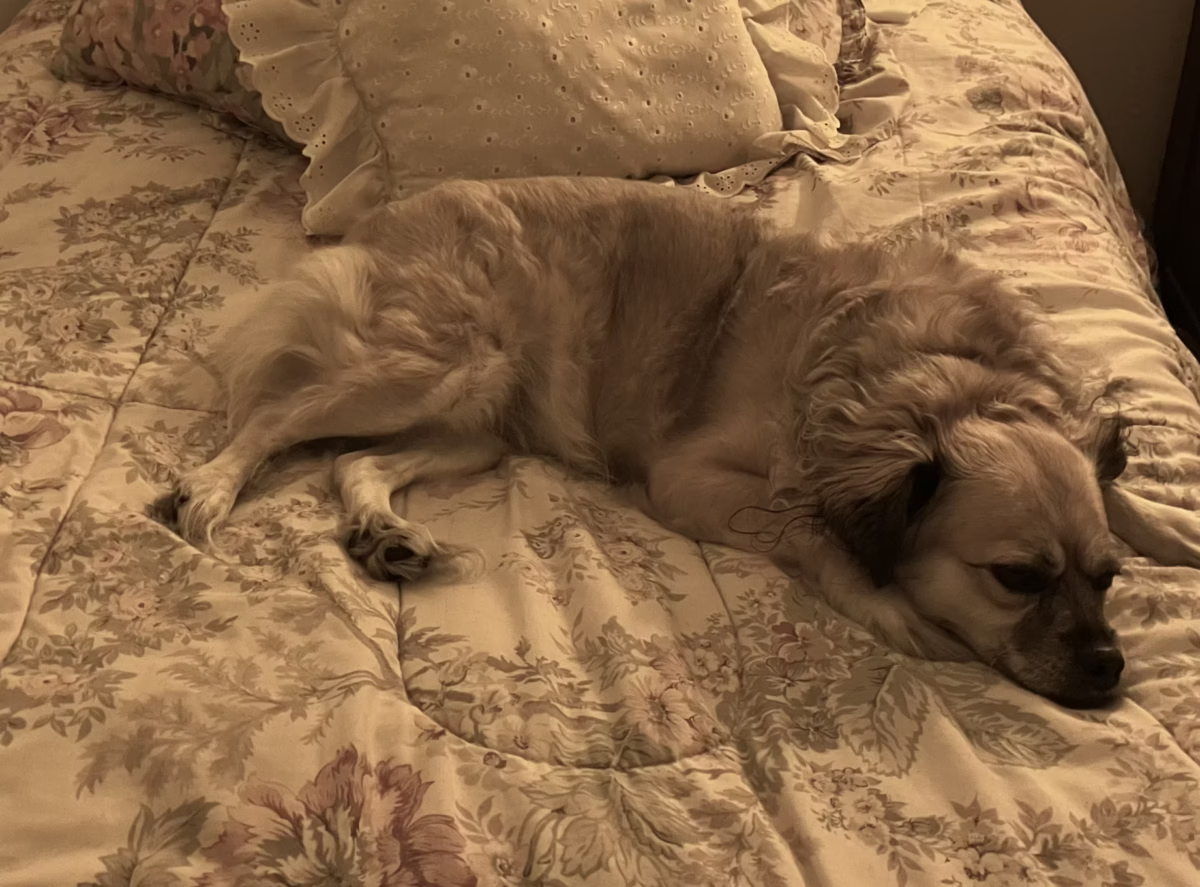

Winnie Lew’s full, legal, government-issued, baptismal name is Windham Lewis.
It sounds like a small law firm or a struggling indie folk band.
It is not the name of a twenty-two-pound rescue dog with a tail like a feather duster and the personality of a mildly judgmental hall monitor. But names, like people and dogs, grow into themselves. Or around themselves. Or in Winnie Lew’s case, sideways and a little crooked.
Winnie Lew came into my life in 2020, which already tells you everything you need to know about the kind of emotional stability we were both bringing to the relationship.
I had moved to Selma, Alabama, to begin life as an Episcopal priest in the deep South, and the world had just decided to shut itself down like a haunted house at the end of the season.
I didn’t know anyone.
I didn’t know where the good coffee was.
I didn’t know which light switches controlled which mysterious lights in my new church.
My dog that moved here with me died unexpectedly 3 months after my arrival. And the one thing I knew was that I needed something alive in my house besides sourdough starter and Zoom fatigue.
Enter: Winnie Lew.
She was advertised on the shelter’s website as a “Pekingnese/Pug mix.”
This was accurate in the same way that calling a tornado “a breeze” is technically a weather report.
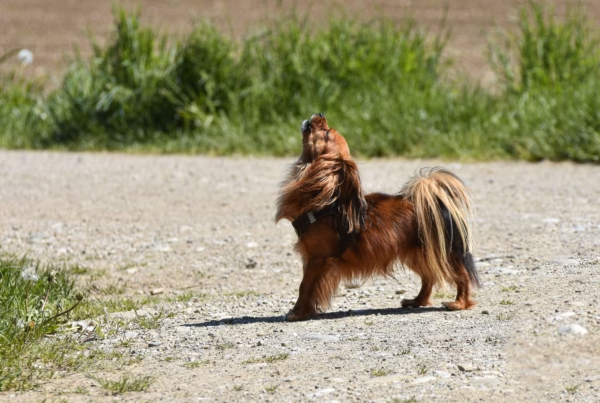
She is part poodle, part Pekingese, part chihuahua, and part something that looks like it once snuck across a border fence under cover of darkness. The one and only Pookinghuahua.
She looks like a dog created by committee.
Her face is expressive in a way that suggests she is constantly disappointed in my life choices. And her tail… her tail looks like it belongs to an entirely different dog.
The rest of her body is fluffy. Sensible fluff. Soft fluff. But her tail is a full-on showpiece. It is long, luxurious, and billowy, like it should have its own Instagram account and endorsement deals. It waves behind her like a question mark made of clouds.
When I first met her, she looked at me like she had already decided I was acceptable, but not impressive.
I was smitten immediately.
She was unimpressed immediately.
This dynamic has remained consistent.
I brought her home, and we entered into what I would later realize was a legally binding emotional contract: I would be her entire social world during a global pandemic, and she would be my therapist who charged me in dog treats and emotional dependency.
She became my COVID companion, my co-worker, my accountability partner, and my supervisor.
She attended every Zoom meeting by sitting directly on my laptop keyboard. She monitored my snack intake. She judged my sermon drafts with long sighs and slow blinks.
But before all that bonding, before the rituals and routines and shared trauma of sourdough attempts, I had to name her.
The shelter had given her a perfectly fine name. Twinkle. I just knew it wasn’t right. This dog needed a name with history. A name with gravitas. A name that said, “Yes, I am small, but I am mighty, and I have opinions about your theology and live in Selma, Alabama.”
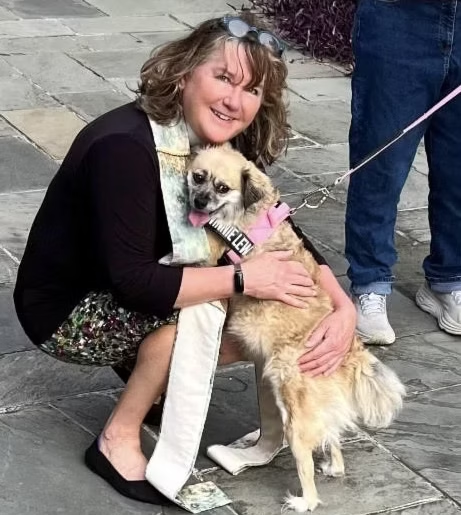
Photo Credit Amy George
I named her Windham Lewis.
Windham, after Katherine Windham, the legendary Alabama storyteller who could spin a tale out of thin air and a rocking chair. Lewis, after John Lewis, the civil rights leader whose courage, faith, and stubborn hope changed the world. I liked the way it sounded. Windham Lewis.
It felt rooted. Southern. Episcopal. The kind of name that would look good embroidered on a tiny vest.
I told people this with a straight face. “This is my dog, Windham Lewis. She’s named after Katherine Windham and John Lewis.” People would nod politely and then look down at her tiny body and mismatched tail and say, “Oh. That’s… meaningful.”
Winnie Lew did not care about the historical significance of her name. She did not care about Katherine Windham’s storytelling legacy. She did not care about John Lewis’s moral leadership. She cared about snacks. So Windham Lewis very quickly became Winnie Lew.
This happened organically, the way all good nicknames do: through laziness, affection, and the need to yell something short when your dog is about to eat a bug.
“WINDHAM LEWIS, NO” is too long when a Pookinghuahau is sprinting toward something questionable on the driveway. “WINNIE LEW, NO” gets results.
Also, she just looks like a Winnie Lew.
She has Winnie Lew energy. She has a Winnie Lew face. She has Winnie Lew posture.
Winnie Lew is what happens when you cross a Victorian orphan, a small-town mayor, and a stuffed animal that’s been through the wash too many times. Her personality is… layered.
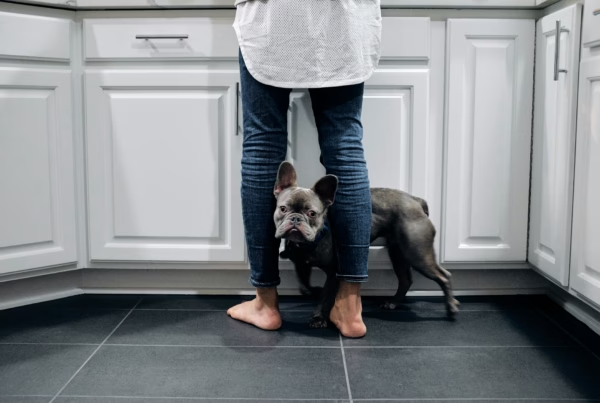
She is deeply attached to me but also acts like she is doing me a favor by staying. She follows me from room to room like a furry ghost. If I close a door, she sits outside it. There is no going to the bathroom alone in my home.
She insists on greeting people formally. Then she rolls onto her back and shows them her stomach like she’s running a clearance sale on vulnerability. She carries herself like a dog who knows she is named after giants but has chosen a life of casual chaos instead.
Winnie Lew has adapted to parish life beautifully.
She naps during sermon prep. She supervises phone calls. She attends pastoral care visits by sitting in the car and staring out the window like she’s thinking deep thoughts about mortality.
She is basically my unpaid pastoral care assistant. She has met vestry members. She has met parishioners. She has even met a bishop. She treats them all exactly the same, which is to say: with mild suspicion and an openness to snacks.
During the loneliest months of 2020, Winnie Lew was my constant.
When everything felt uncertain and heavy and strange, she was solid. Warm. Present. She didn’t care about case numbers or headlines or livestream glitches.
She cared about walks. She cared about meals being on time. She cared about sitting exactly six inches from my face while I tried to work.
She taught me the theology of the ordinary: that holiness shows up in routines, in small bodies leaning against your leg, in the simple act of staying.
Her name, Windham Lewis, feels even more right now.
Because like Katherine Windham, Winnie Lew is a storyteller.
She tells stories with her eyes and her tail and her dramatic sighs. She narrates our days in her own quiet, furry way. And like John Lewis, she is persistent. Faithful. Willing to walk with me, even when the path is uncertain and the world feels too big.
She is my small companion with a big name and an even bigger tail.
She is my COVID dog.
My Selma dog.
My Episcopup.
She is Windham Lewis, also known as Winnie Lew, also known as “Please Stop Barking at That.”
She is history, theology, comedy, and fluff, all rolled into twenty-two pounds of stubborn grace.
And if Katherine Windham and John Lewis are looking down from somewhere, I hope they are pleased.
Or at least amused.
Meet The Author

Amy George is an Episcopal priest in Selma, Alabama, where she shares an office with her volunteer pastoral care assistant, Winnie Lew. When not doing God’s work, you can find Amy doing Dog’s work–vacuuming a never ending supply of dog hair, chauffeuring Winnie Lew, and being the provider of endless dog treats. Amy feels blessed to have no fear of ever being attacked by squirrels, UPS delivery people, or small lizards.