
This article was written by Dr. Larissa Munoz, a licensed veterinarian who brings professional expertise and hands-on experience to every recommendation. Because when it comes to our dogs, we want advice you can actually trust.

Your dog has never met a crowd quite like your family.
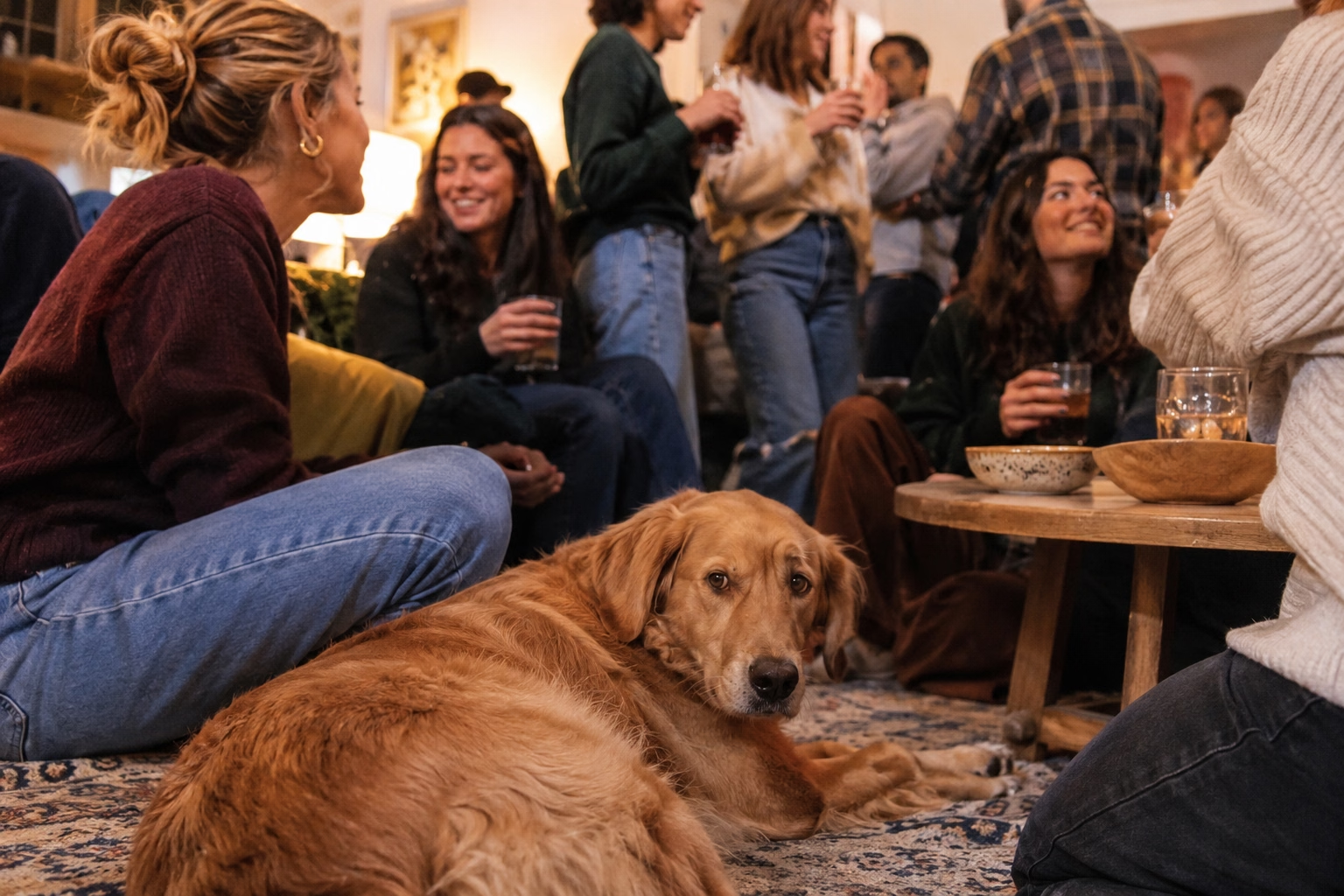
And with Thanksgiving bringing unfamiliar faces, unexpected hugs, and plenty of commotion, now’s a good time to think about how they’ll handle the gathering.
You begin overthinking every walk you skipped, every dog outing you pushed back, and whether you’ve been doing enough so far. Then you ask yourself, “Does my dog need more friends?”
As a veterinarian, I’ve found myself having this exact conversation with worried pet owners more times than I can count, especially around the holidays. I can confidently tell you that socialization probably doesn’t mean what you think it does, and that’s perfectly okay. So let’s talk about what it actually means, and how to socialize your dog without adding more to your plate.
For more socialization tips, check our guide here!
Does My Dog Need Friends? Socialization Is Broader Than Playdates
“Okay Larissa… so what does socialization actually mean?”
Think of socialization as helping your best friend feel calm and confident around new places, people, sounds, handling, and other dogs. The American Veterinary Society of Animal Behavior recommends that this kind of exposure continue into adulthood, not just puppyhood. So no, it’s not too late for your six-year-old couch potato.
And please do not feel guilty if your dog is not fond of other dogs. Some dogs are simply more selective about their company, and honestly, I don’t blame them! I wouldn’t want to be expected to love everyone I meet, either.
From my clinic experience, the dogs who handled their vet visits the best were not necessarily the social butterflies. They were the ones who trusted me enough to get up close and personal, touching their paws, ears, and mouth, without thinking something scary was about to happen
How to Socialize a Dog Without Giving Up Your Weekends
Luckily, socializing an adult dog doesn’t have to feel like a chore. Here are some simple ways to fit it into your normal routine:
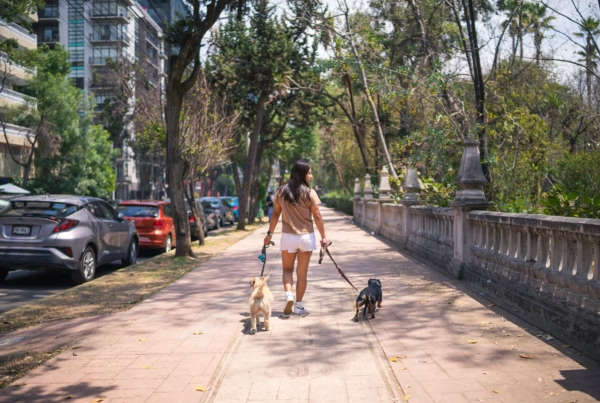
- Try a new route during your daily walk.
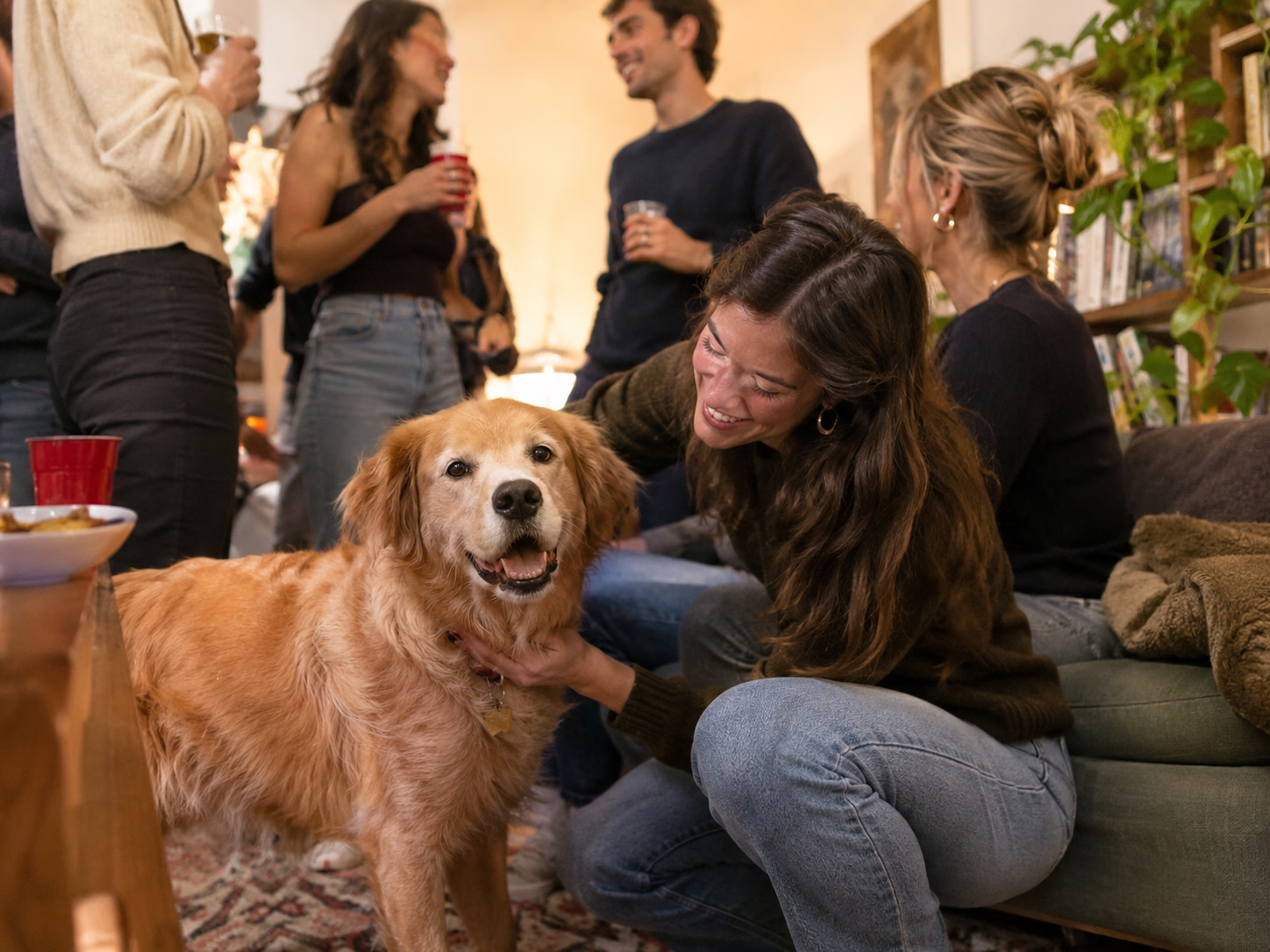
- Invite one calm friend over (two-legged or four-legged) for a social visit.
- Sit out on the porch and people-watch together.
- Take a car ride to the pet store.
- Enjoy some time together on a coffee shop patio.
- Spend just a few minutes helping them get comfortable with you touching their paws, ears, and mouth.
I especially like the last one because it can make future vet visits feel less hectic for both of you. You’ll thank me later!
Before starting anything new, read your dog. If their body language changes and they start to tense up, pull away, or otherwise signal they’re uncomfortable, listen to them. Think of it as their version of faking a phone call to leave a party early.
It may simply mean they’ve had enough for now, and trying again later is completely okay. Socialization should build your dog’s confidence, not force them through an experience when they’re already overwhelmed.
Preparing for a House Full of Holiday Guests
Now back to that sweet potato casserole. It’s out of the oven, and your cousins are arriving any moment. Instead of panicking, try these last-minute tips:
- Set up a quiet, safe space. The guest room is perfect. Add some water, their crate if they have one, and maybe their favorite toy. Make it somewhere they can retreat if the gathering starts to feel overwhelming. This space should never feel like a punishment.
- Keep your dog’s leash and harness on for the first few minutes as guests arrive. Door greetings can quickly become the most exciting part of the night, and that extra control helps if everyone gets a little too excited. Especially when Uncle Ray walks in at full volume like he hasn’t seen your dog in twelve years.
- Focus on one interaction at a time, and let your dog approach. This goes much more smoothly than four cousins running up at once, which can feel a little intimidating!
- Stick to their normal routine. Try to feed and walk them around the same time you would any other night. Dinner at 5 means dinner at 5, and they will absolutely remind you. Dogs find comfort in a consistent routine, especially when everything else around them feels different.
- Give your guests a few simple ground rules. Ask them to check with you before petting your dog, avoid hovering over them, and absolutely no table scraps!
I know it can be hard to resist those cute puppy eyes while you convince yourself that one little piece of ham or stuffing couldn’t possibly hurt.
Trust me, my own dog has almost tricked me once or twice, and I’m the vet!
But rich, fatty holiday foods can cause an upset stomach and may even contribute to pancreatitis, a serious and painful condition. I don’t know about you, but I’d much rather end my Thanksgiving happy and full with my family than at the emergency vet clinic with a sick, vomiting dog.
When It’s Time to Call Your Vet or a Dog Trainer
Many dogs just need a little extra time and patience to feel comfortable with all the activity and unfamiliar faces. Honestly, so do some of the cousins.
That said, if you’ve practiced socialization several times and your dog consistently hides or seems visibly anxious, or if they growl, snap, or bite, it may be time to call your vet or a qualified dog trainer.
Growling is your dog’s way of communicating that they’re uncomfortable, not something they should be punished for. And if you notice a sudden or significant change in your dog’s behavior, start with your veterinarian.
The American Animal Hospital Association’s behavior guidelines recommend ruling out medical causes first, since behavior changes can sometimes be a sign of pain or another health issue.
Give Yourself Some Credit, Too
One of my favorite reminders for pet owners is that our dogs pick up on our tone and body language more than we realize. So if you find yourself racing from room to room before twenty relatives arrive, your dog may feel it too.
Take a breath, stick to their normal routine, and give them space when they need it.
And give yourself some credit! Your dog does not need the biggest friend group or constant playdates to be well socialized. Sometimes their happiest moment is curled up with you on the couch while your relatives are still socializing in the kitchen.
You’re already doing something right by taking the time to learn how to show up for your best friend.
Save this for before the holidays!