

If you think you’re flying solo… your dog already called shotgun.
The Truth About Dogs and Airplanes
Here in the South, dogs aren’t just pets. They’re porch companions, road trip copilots, and family. So when it comes to vacations, weddings, or holidays, leaving them behind feels downright criminal.
But in all honesty, air travel with dogs isn’t for the faint of heart. Between airline rules, tiny seats, and that one man in 23B who side-eyes you the whole flight, you’ve gotta plan smarter than a foxhound on a squirrel trail.
So grab your boarding pass, leash up, and let’s break down how traveling with dogs by plane can actually be smoother than a bluegrass fiddle line.
Should Your Dog Fly? What to Ask Before Booking
Not every pup is cut out for the skies. And that’s okay. Before you book, ask yourself:
- Is my dog calm in new environments?
- Are they small enough to fit under the seat, or large enough to handle the cargo hold safely?
- Do they have health conditions (like snub-nosed breeds) that make flying risky?
If your dog panics when the Amazon driver shows up, flying might be too much. And if you’ve got a bulldog who snores like a chainsaw, talk to your vet before you even glance at a boarding gate.
Sometimes the kindest choice is leaving them home with Grandma and a jar of peanut butter.
Picking the Right Airline for Your Pup (Because Not All Carriers Are Created Equal)
Airlines have rules for dog air travel, and they vary like biscuit recipes at a church potluck. Some are more pet-friendly than others, and trust us – you want the one that treats your dog like family, not cargo.
The Most Dog-Friendly Airlines
- Southwest & JetBlue: Known for being fairly pet-friendly, especially for small dogs in cabin
- Delta & American: Allow both in-cabin and cargo, but fees can add up quicker than your Starbucks budget
- Alaska Airlines: Often praised by travelers with pets for smooth processes
Pro Tip: Always call ahead. The website might say one thing, but the gate agent is the one who decides if Biscuit boards.
Packing Checklist for Dog Air Travel
You’ve got snacks, headphones, and your neck pillow. Here’s what your pup needs:
- Airline-approved carrier (on wheels!) (make sure your dog can stand up, turn around, and lie down)
- Absorbent pads or blankets (accidents happen, bless their hearts)
- Collapsible water bowl for sips during layovers
- Favorite long-lasting chew toy for comfort (or distraction when turbulence hits)
- Treats for bribery and good behavior
- ID tags + microchip info in case you get separated
Think of it like a diaper bag, but for your furry toddler who can’t use words.
In-Cabin vs. Cargo: Choosing the Best Option
In-Cabin (Small Dogs)
- Usually 20 lbs or less (including carrier)
- Must stay under the seat the entire flight
- Honestly? The bougie option. They’ll be cozy at your feet while you stress-eat pretzels.
Cargo (Medium & Large Dogs)
- Crated and placed in the plane’s temperature-controlled hold
- Safer than it used to be, but still nerve-wracking
- Always check the airline’s record for pet incidents before booking
If your pup is too big for in-cabin, make sure you have a sturdy crate like this one from Gunner, direct flights (fewer layovers = less stress), and book during cooler seasons to avoid heat issues.
Dog Air Travel Tips (Learned the Hard Way)
- Book direct flights. Fewer layovers means fewer chances for lost luggage — or worse, lost dogs
- Avoid extreme temps. Don’t fly cargo in the July heat or January ice
- Exercise before the airport. A tired dog is a good dog. Run those zoomies out early.
- Arrive early. TSA agents move slow as molasses when there’s a wagging tail involved
- Stay calm. Your dog reads your nerves like they read treat bags
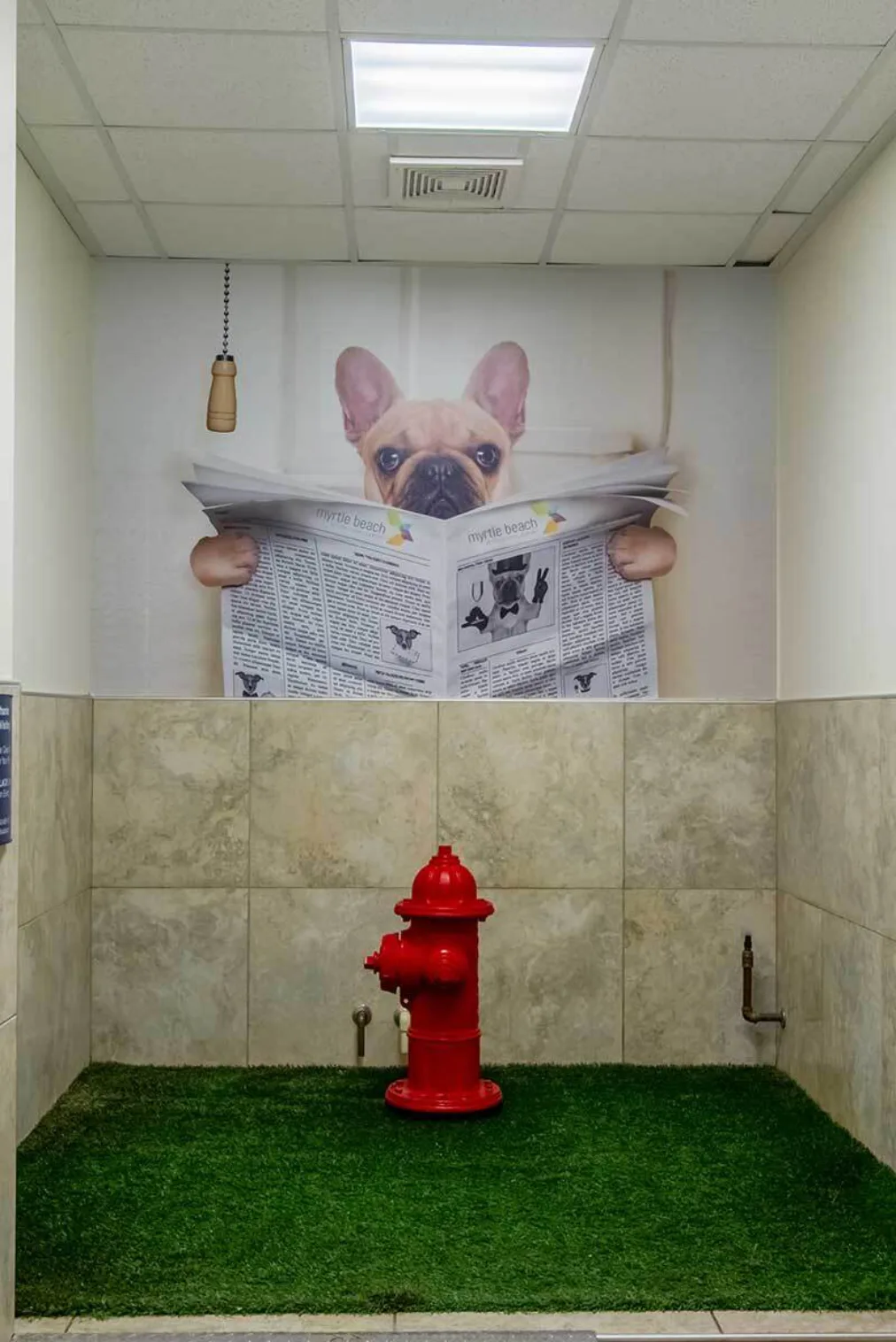
Photo Credit: Myrtle Beach International Airport
Navigating the Airport with Your Dog
Security lines are already a circus. Add a dog and it’s basically Barnum & Bailey. Here’s how it goes:
- Remove your dog from the carrier
- Send the empty carrier through the X-ray belt
- Walk your dog through the scanner like you’re strutting a runway
- Reassemble your life on the other side
Pro tip: Wear slip-on shoes. Wrestling with laces while holding a wriggly beagle is a recipe for disaster.
Landing Like a Pro
When you land, give your pup a potty break ASAP. Many airports now have pet relief stations (sometimes indoors, sometimes in a weird corner by baggage claim).
Offer water, stretch those legs, and give plenty of praise. Because let’s be real… traveling with dogs is harder for them than it is for you. They didn’t get the Biscoff cookies or free Coke.
Final Boarding Call: Love Over Logistics
At the end of the day, air travel with dogs isn’t about convenience. It’s about commitment. It’s about saying, “You’re part of the family, and we’re not leaving you behind.”
Sure, it takes planning, patience, and maybe a stiff drink once you land. But when your dog curls up next to you in a new city, ears twitching as they dream, you’ll know it was worth every TSA pat-down and every side-eye from seat 23B.
Because the South doesn’t just raise dogs. We raise family. And family always flies together.
FAQ: Traveling With Dogs
Is it safe to fly with dogs?
Generally, yes—if you pick the right airline, follow safety guidelines, and your dog is healthy. But always consult your vet first.
What’s the best way for small dogs to fly?
In-cabin, under the seat. It’s less stressful and keeps them close to you.
Can large dogs fly in-cabin?
Usually no. Most large dogs must fly in the cargo hold unless they’re service animals.
What paperwork do I need for dog air travel?
Most airlines require a recent health certificate and proof of vaccinations. International flights may require extra documentation.
How much does it cost to fly with a dog?
Fees vary – usually $95–$200 each way for in-cabin pets. Cargo can cost more depending on size and airline.
Suggested Read
Meet The Author

Beau Boyd is the Co-Founder and Managing Editor of Darling Dog. He lives in Selma, Alabama with his family and his beloved Goldie, Charlie.