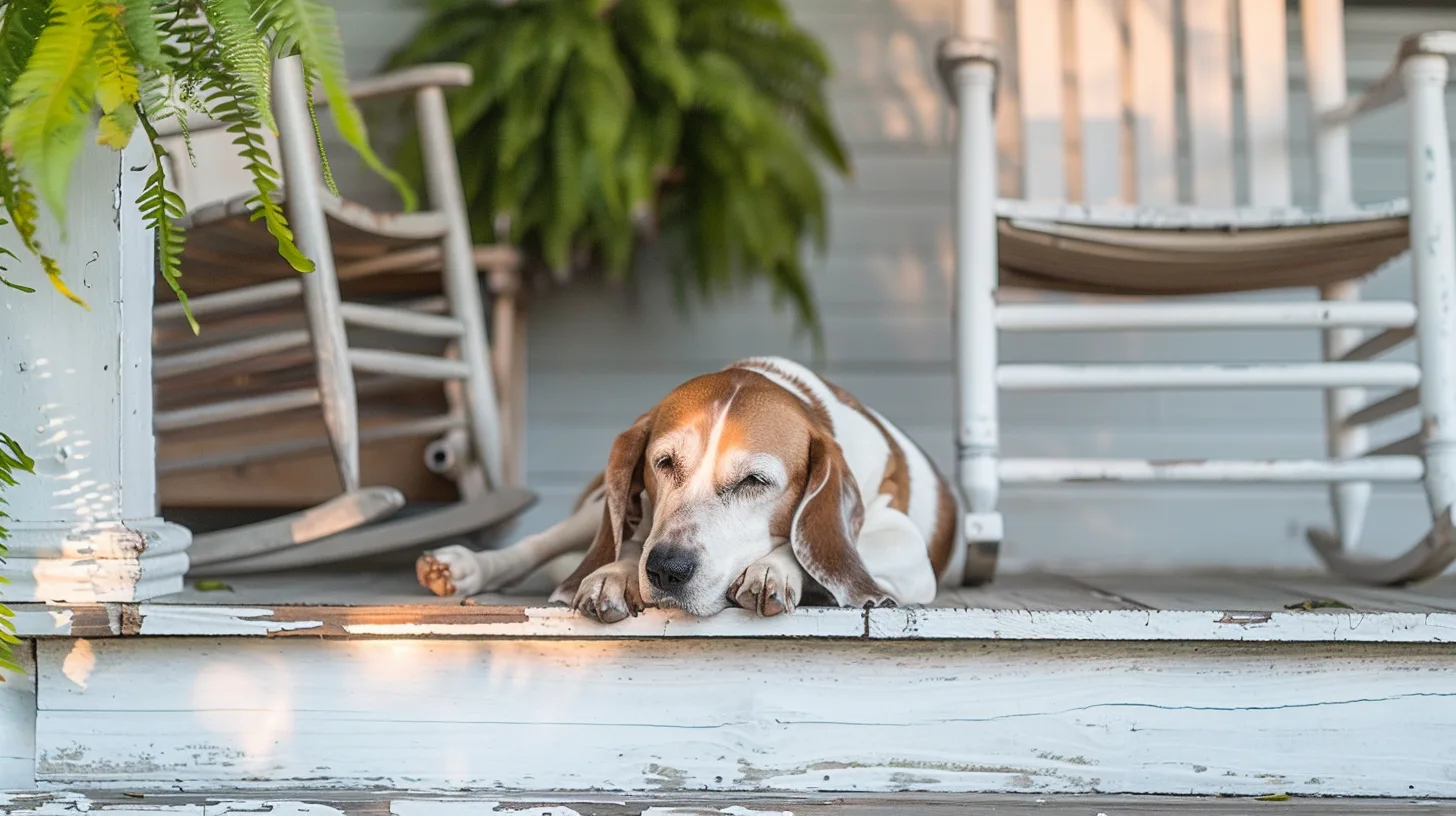

If the kitchen is the heart of a Southern home, the porch is its soul.
The porch is sacred, y’all.
It’s where secrets get swapped, sweet tea sweats in mason jars, and summer nights stretch out under buzzing cicadas. And right there in the middle of it all – sometimes sprawled across the steps, sometimes perched like a sentinel on the top rail – is the porch dog.
A porch dog in the South isn’t just decoration. They’re the greeter, the guardian, the neighborly icebreaker, and sometimes the napper-in-chief.
Porch dogs are part of the landscape, woven into the very fabric of Southern porch dog culture. And whether you grew up with one, or just waved at one on your evening walk, you know they’re more than just pets… they’re porch royalty.
Defining a Porch Dog: More Than Just a Nap Buddy
A porch dog isn’t defined by breed or size. It’s defined by lifestyle. Big or small, purebred or mutt, the porch dog South tradition is about how a pup lives.
- The Greeter: Always the first to say hello, tail thumping against the floorboards when friends pull up the drive
- The Watchdog: Keeping an eye out for mailmen, delivery folks, and nosy raccoons who think they own the place
- The Napper: Claiming the sunniest patch of the porch as their personal spa retreat
It’s a role, not a label. And if your dog knows how to settle into the rhythm of porch life, congratulations. You’ve got yourself a porch dog.
The Cultural Significance of Porch Dogs in the South
In the South, porches aren’t just architecture… they’re community. They’re where neighbors wave to each other, kids kick off muddy shoes, and conversations stretch late into the night. And the porch dog? They’re the heartbeat of that scene.
A porch dog says: this home is lived in, this home is loved, and everyone who comes up these steps is family… unless you’re selling something. They embody Southern porch dog culture, where dogs aren’t tucked away inside or fenced off from the world, but part of the daily theater of life happening outside.
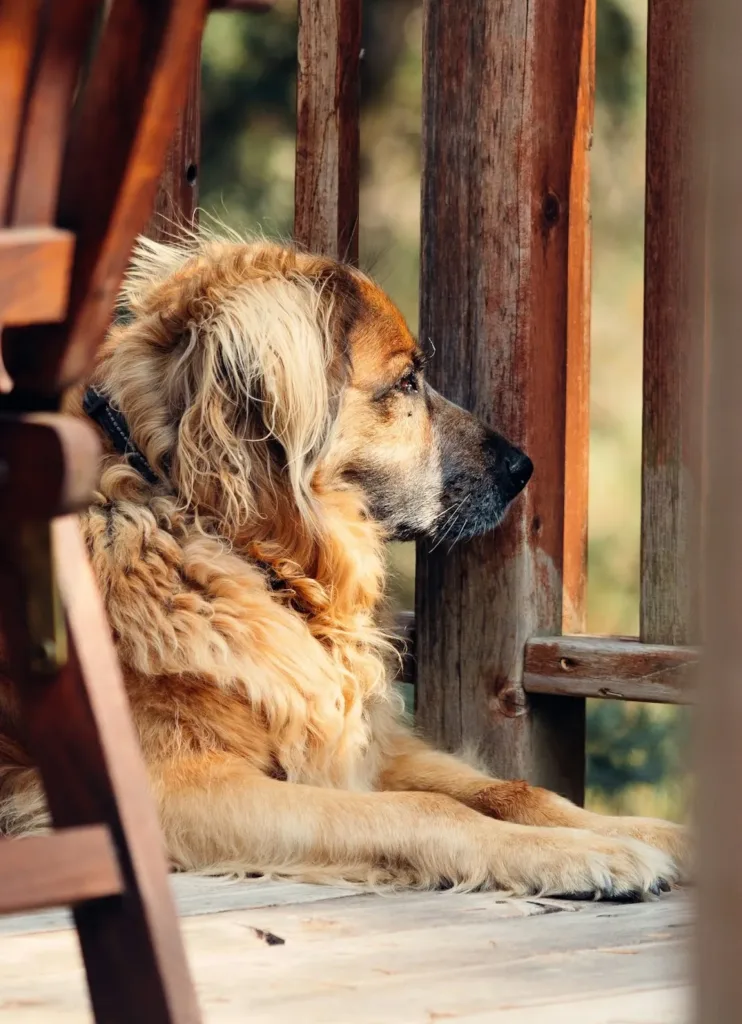
Photo Credit: Griffin Wooldridge
Porch Dog Jobs: Yes, They’re Employed
A porch dog isn’t lazy… they’re multitasking. Here’s the official job description:
- Neighborhood Greeter: Wags for friends, low rumbles for strangers
- Kids’ Supervisor: Making sure the little ones stay out of the road (or at least offering moral support while they chalk up the driveway)
- Package Inspector: Sniffing every Amazon box like it might contain contraband or, better yet, dog treats
- Sunbathing Model: Because every porch dog knows how to drape themselves across steps like they’re posing for a Southern Living cover
- Community Mascot: Porch dogs often become local legends. Everyone in the neighborhood knows them by name, even if they’ve never met the owners
Why Porches and Dogs Go Hand in Paw
There’s a reason porch dogs and the South go hand in hand:
- Architecture: Wide wraparound porches weren’t built just for people. They’re big enough for dogs to sprawl, watch, and wait
- Lifestyle: Southerners live outdoors as much as indoors, and dogs fit right into that rhythm
- Community: A porch without a dog feels half-empty. With a dog? It’s a welcoming committee, a safety system, and a best friend rolled into one.
The porch dog South tradition is part function, part fashion… and all heart.
Porch Dog Traditions and Stories
Every Southerner has a porch dog story. Maybe it’s the hound who sat by the rocking chair every night waiting for Dad to come home from work. Or the little terrier who barked at every bike that dared to pass “their” sidewalk. Or the lab who’d let the neighbor kids use him as a pillow during summer sleepovers on the porch.
These stories are part of what make porch dogs icons. They’re not just pets. They’re characters in the daily drama of Southern life.
Modern Porch Dog Culture
Life has changed, but porch dogs remain timeless. New builds may come with smaller porches, but folks still carve out space for their dogs – whether it’s a front stoop, a screened-in patio, or even just a big bay window overlooking the street.
And let’s be real – porch dogs have gone digital. That hound who used to watch for neighbors? Now he’s on Instagram with 20,000 followers, still lounging in the same spot, just with more hashtags. Southern porch dog culture hasn’t disappeared… it’s just expanded to include porch pups who’ve become influencers.
How to Raise the Ultimate Porch Dog
Want your pup to embrace porch life like a pro? Here’s how to set them up for success:
- Comfort: Give them a bed, cushion, or blanket in their favorite sun spot
- Safety: Make sure the porch is secure – no loose rails or gaps where little ones can squeeze through
- Water: Keep a fresh bowl out, especially on hot summer afternoons
- Boundaries: Teach them to stay on the porch, not chase after every squirrel or neighbor’s golf cart
- Routine: Porch dogs thrive when life has a rhythm – morning coffee with you, afternoon watch duty, evening porch sits with the family
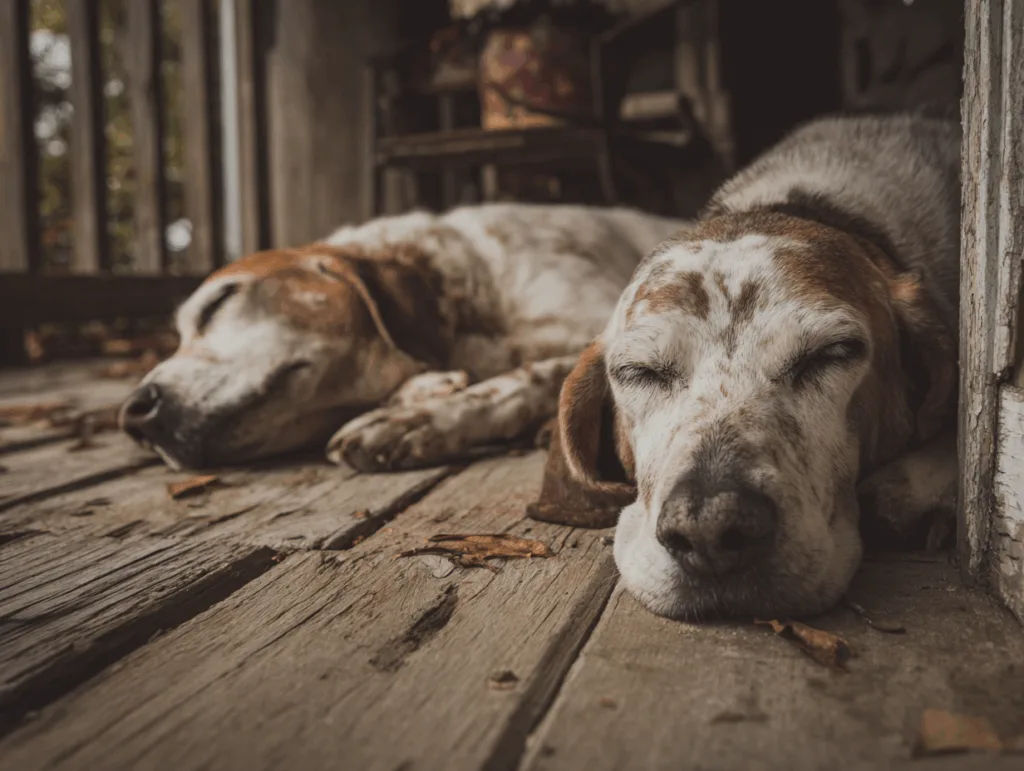
Why Porch Dogs Are Southern Icons
At the end of the day, porch dogs aren’t just about cuteness. They’re about belonging. They’re about that special kind of Southern life where dogs aren’t tucked away – they’re part of the story, the scenery, the neighborhood itself.
A porch dog says, “This house is lived in. This family is home. And you’re welcome here.”
So here’s to the porch dogs of the South. The greeters, the guardians, the biscuit-beggars, the sun-soakers. May your porches always be full, your dogs always wagging, and your sweet tea always cold.
Suggested Reads:
Meet the Author
Hey there! I’m Natalie Smith, a 24-year-old born in Crescent City, California, who now calls Bend, Oregon, home. If you’ve never been to Bend, let me tell you—it’s basically the dog capital of Oregon. I’m pretty sure dogs outnumber people here! My love for animals (especially dogs) and writing has been with me since I was a kid, and now I get to share that passion through my articles. Oh, and I just became a mom to a baby boy named Milo, which means my hands are officially full—with diapers, dog treats, and coffee! Life feels complete, and a little chaotic, but I wouldn’t have it any other way.